Integración de Ghost + LinkedIn: cómo distribuir tu blog automáticamente a compradores B2B
Has publicado una entrada de blog en Ghost. Está activa. El mapa del sitio está actualizado. Google lo indexará en tres a cinco días.
Y luego no pasa nada.
La publicación alcanza a doce personas: tus suscriptores, tu equipo y cuatro bots. LinkedIn es donde se encuentran tus compradores, y tu publicación en Ghost está situada en un subdominio que nunca visitarán a menos que alguien se los muestre.
Esa es la brecha de distribución. Ghost es una excelente plataforma de publicación. Maneja los fundamentos de SEO, la generación de mapas del sitio y una salida estructurada limpia. Lo que no hace es mover tu contenido de publicado a leído. La distribución recae completamente en ti — o en el sistema que construyas alrededor de Ghost.
Esta publicación cubre exactamente cómo conectar Ghost CMS y LinkedIn en un solo flujo de trabajo: publicar una vez, alcanzar a los compradores correctos en la plataforma donde realmente están pasando tiempo.
Por qué Ghost y LinkedIn pertenecen juntos para B2B SaaS
Ghost está construido para el contenido. LinkedIn está construido para la atención B2B. Para un fundador de SaaS que se dirige a otros fundadores, jefes de crecimiento o líderes de marketing, LinkedIn es el canal de compradores con la mayor concentración disponible.
LinkedIn ofrece una efectividad en la generación de leads un 277% mayor que Facebook y Twitter combinados para audiencias B2B. Más importante aún, es la única plataforma donde tus compradores se autoidentifican en su perfil público con su rol, tamaño de empresa y contexto de compra — lo que significa que la distribución allí no es solo alcance, es alcance cualificado.
La brecha que la mayoría de los operadores de blogs de Ghost dejan abierta: escriben la publicación y la comparten manualmente una vez. Una publicación. Un compartir. Mínima reutilización. La publicación obtiene 24 horas de alcance orgánico y desaparece.
Los fundadores que construyen motores de contenido compuestos tratan cada publicación de Ghost como material fuente para cinco puntos de contacto en LinkedIn — no uno. Y construyen el flujo de trabajo para que esos puntos de contacto alcancen a los compradores en función de la intención, no del momento. Ese mismo principio se aplica al SEO: para el lado completo de clasificación de esto, la configuración de automatización de SEO de Ghost cubre la estructura de palabras clave y la optimización de AEO. Esta publicación cubre la capa de distribución.
Cómo es realmente una integración de Ghost + LinkedIn
Una integración adecuada de Ghost + LinkedIn no es una simple auto-publicación.
Publicar automáticamente URLs de blogs en LinkedIn es la versión de menor valor de la distribución. La tasa de clics en publicaciones de enlaces desnudos es inferior al 2% porque el algoritmo de LinkedIn suprime el alcance de enlaces externos. Un URL compartido que llega al 2% de tus seguidores no es distribución. Es ruido de fondo.
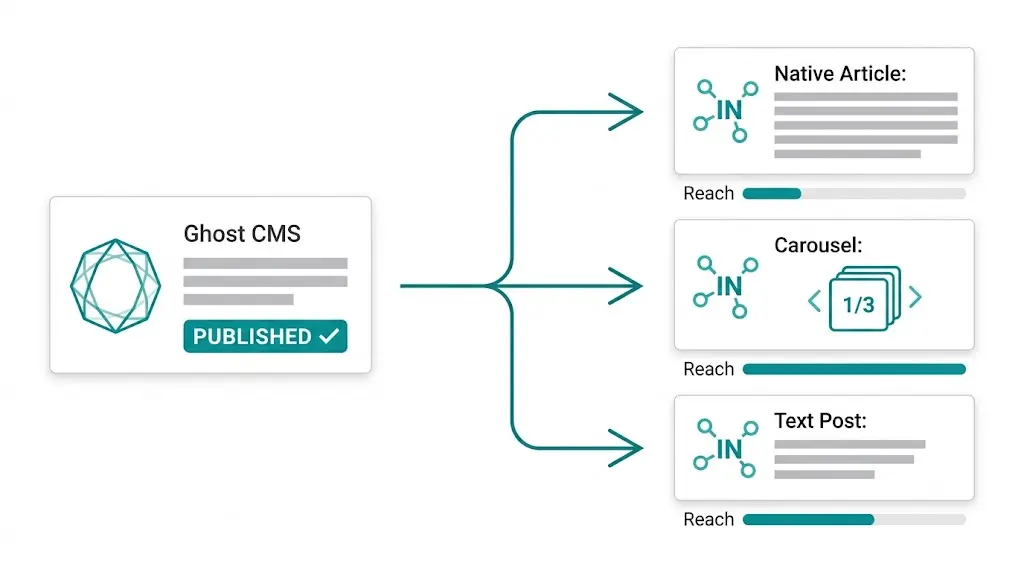
La versión de alto valor transforma el contenido de Ghost en formatos nativos de LinkedIn que el algoritmo realmente promueve:
Publicación de Ghost publicada →
Artículo nativo en LinkedIn. Una versión de la publicación de Ghost escrita para el formato de artículo de LinkedIn — directa, opinativa, en primera persona. Comparte la idea central sin requerir un clic a Ghost. Los artículos en LinkedIn son indexados por Google, creando una superficie de citación secundaria para el mismo tema.
Publicación de carrusel en LinkedIn. El marco clave o datos de la publicación de Ghost convertidos en un carrusel de cinco a siete diapositivas. Los carruseles obtienen consistentemente tres veces el alcance orgánico de las publicaciones de enlace porque mantienen a los usuarios en la plataforma.
Publicación de texto en LinkedIn. La idea más fuerte de la publicación de Ghost convertida en una observación independiente — sin enlace, alcance máximo, compromiso en los comentarios que resalta señales de intención de compra de tu ICP.
Monitoreo de intención. LinkedIn busca personas que hagan la pregunta a la que tu publicación de Ghost responde. Thoth identifica esas publicaciones y redacta una respuesta contextual que menciona el blog de manera natural.
Captura de señales. Qué formato de LinkedIn generó más visitas a perfiles, solicitudes de conexión y menciones entrantes — retroalimentado automáticamente en la siguiente breve de contenido de Ghost.
Esta es una distribución que se acumula. La publicación de Ghost es la fuente. LinkedIn es el sistema de amplificación. Y las señales de compromiso de LinkedIn se retroalimentan en lo que escribes a continuación en Ghost.
Paso a paso: conectar Ghost CMS a LinkedIn con Thoth
Paso 1: Conectar Ghost CMS a Thoth
Thoth se conecta a Ghost a través de la API de Contenido de Ghost. Una vez conectado, cada publicación publicada en Ghost — o promovida de borrador a publicada — activa automáticamente el flujo de trabajo de distribución. No se requiere configuración de webhook de tu parte.
Para la documentación completa de integración de Ghost CMS, consulta la integración de Ghost CMS con Thoth. La configuración de la clave de API toma aproximadamente diez minutos.
Paso 2: Define tus formatos de distribución en LinkedIn
Para cada publicación de Ghost, Thoth genera tres piezas de contenido nativas de LinkedIn.
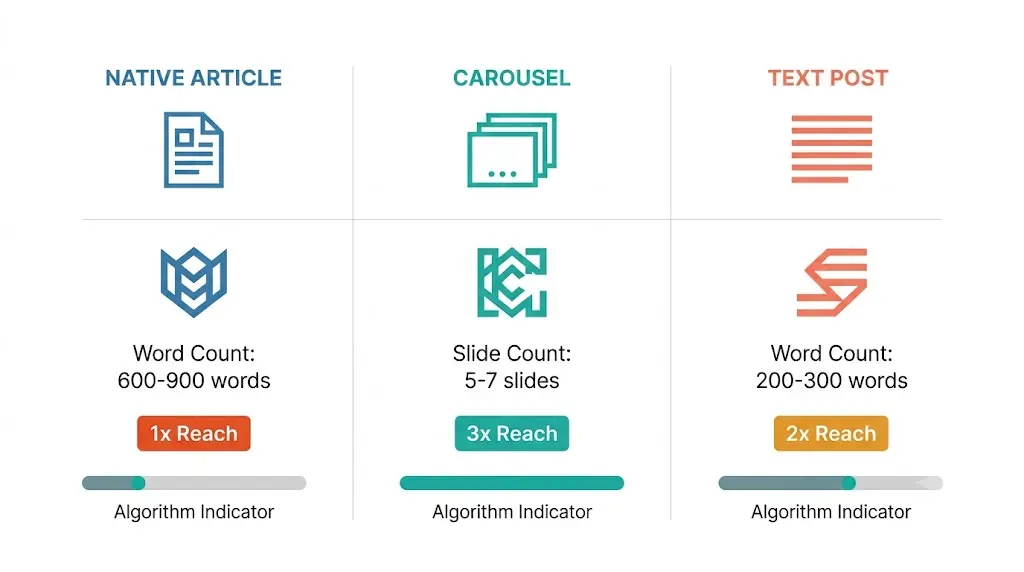
El artículo nativo. Una versión de 600 a 900 palabras escrita para el formato de artículo de LinkedIn. El gancho inicial se reescribe para el algoritmo de LinkedIn: pregunta directa, declaración audaz o estadística sorprendente en la primera línea. Se preserva el marco central. La CTA apunta a la publicación completa de Ghost para los lectores que desean profundidad.
El resumen del carrusel. Cinco a siete puntos clave extraídos de la publicación de Ghost, formateados como puntos por diapositiva. Thoth genera la estructura de diapositivas y el texto. Tú revisas y el diseño pasa por una plantilla de Canva o un componente de Figma conectado a tus pautas de marca.
La publicación de texto. La idea más compartible de la publicación de Ghost, escrita como una observación independiente sin enlace externo. Este es el formato de LinkedIn con mayor alcance y el mejor para generar comentarios — que son la señal de mayor valor para identificar compradores que piensan activamente sobre el tema.
Paso 3: Configura palabras clave de monitoreo de intención
Thoth monitorea LinkedIn en busca de publicaciones que contengan las preguntas exactas que responde tu publicación de Ghost. Si tu publicación de Ghost cubre la automatización de SEO de Ghost, Thoth está atento a publicaciones que preguntan sobre el ranking de blogs de Ghost, la estrategia de contenido de Ghost y la configuración de SEO de Ghost CMS.
Cuando aparece una publicación coincidente, Thoth redacta una respuesta contextual que agrega valor genuino y menciona tu publicación de Ghost como recurso de manera natural. La respuesta es revisada por humanos antes de enviarla — tú ves la publicación, el contexto y el borrador. Un clic para aprobar.
Paso 4: Retroalimentar el compromiso en la planificación de contenido
Cada pieza de contenido en LinkedIn conectada a una publicación de Ghost genera datos. Qué publicaciones reciben más comentarios. Qué diapositivas del carrusel obtienen compartidos como capturas de pantalla. Qué publicaciones de texto generan visitas a perfiles de compradores coincididos con el ICP. Thoth captura estas señales y las retroalimenta en la próxima breve de contenido de Ghost.
Para equipos que también realizan prospección en LinkedIn para compradores B2B de SaaS, las señales de intención de la distribución y las señales de compra de la prospección se combinan en un solo pipeline — no en dos flujos de trabajo separados.
La pila de distribución de Ghost a LinkedIn
| Paso | Qué sucede |
|---|---|
| Publicación de Ghost | Thoth detecta el evento de publicación a través de la API de Contenido de Ghost |
| Artículo nativo | Versión de artículo de LinkedIn generada y en cola para revisión |
| Carrusel | Estructura de diapositivas generada, enviada a la plantilla de diseño |
| Publicación de texto | La idea más fuerte extraída, borrador de publicación independiente redactado |
| Monitoreo de intención | LinkedIn busca compradores preguntando sobre la pregunta que responde tu publicación |
| Borradores de respuesta | Respuestas contextuales redactadas para revisión y aprobación humana |
| Captura de señales | Los datos de compromiso retroalimentan la siguiente breve de Ghost |
Tiempo manual por publicación de Ghost: 15 a 20 minutos para revisión y aprobación. Producción de distribución: Tres a cinco puntos de contacto en LinkedIn por publicación en lugar de uno.
Ghost + LinkedIn vs Buffer o Hootsuite
Buffer y Hootsuite pueden programar una publicación en LinkedIn desde una URL de Ghost. Ahí es donde se detienen.
La brecha es la inteligencia. Una publicación de enlace programada le dice a LinkedIn que muestre tu URL a algunos de tus seguidores. No extrae el marco de tu publicación y lo reescribe como contenido nativo de LinkedIn. No encuentra compradores preguntando sobre el tema. No retroalimenta las señales de compromiso en tu calendario de contenido.
Para un fundador de SaaS que publica dos entradas al mes en Ghost, la diferencia entre una publicación de enlace programada y cinco puntos de contacto nativos de LinkedIn es la diferencia entre 50 impresiones y 5,000.
La escala de distribución no se trata de la frecuencia de publicación. Se trata de la inteligencia de formato — entender qué formatos de contenido de LinkedIn alcanzan a tu audiencia y cuáles son suprimidos por el algoritmo. Para una visión más amplia de cómo esto se conecta con la visibilidad de búsqueda con IA, el seguimiento de citas de IA para tu contenido de blog cubre cómo las menciones en LinkedIn se convierten en señales de citas de IA a lo largo del tiempo.
Preguntas frecuentes
¿Listo para conectar Ghost y LinkedIn? [Obtén una auditoría gratuita de visibilidad de IA en distribution.studio](https://distribution.studio) — ve tus brechas de SEO, AEO y GEO en 10 minutos, y luego construye el flujo de trabajo de distribución que pone cada publicación frente a los compradores que lo necesitan.
Back to all blogs